Design
On-site or remote design
An Aurora-modeled proposal from your real roof, real shade and real utility rate. Conservative estimates, no best-case math.
Custom systems for homes across New England and Florida. Tier 1 panels named on your quote, installed by our own crews, never a subcontractor.
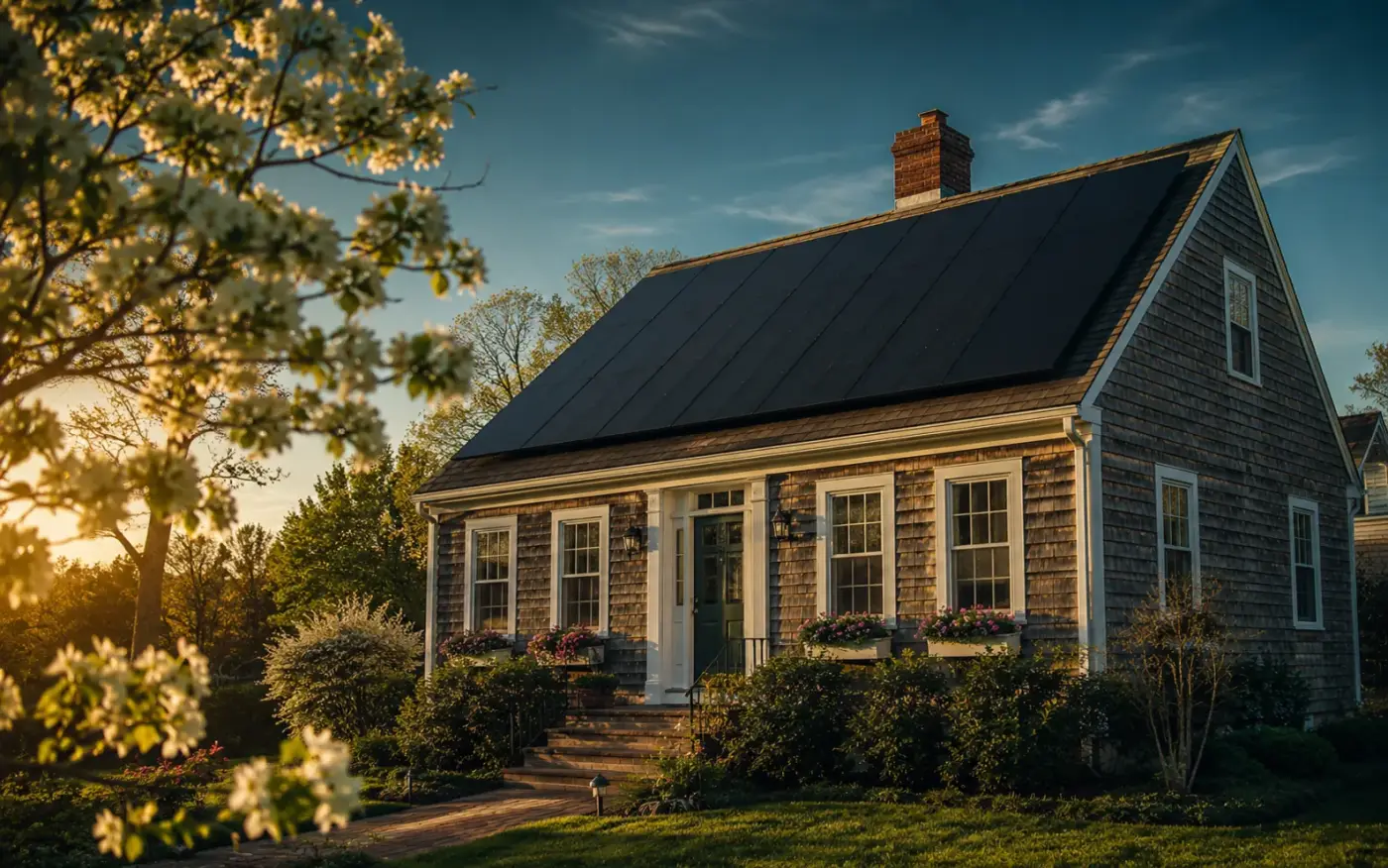
No equipment downgrade after you sign, and nothing left to figure out at install.
An Aurora-modeled proposal from your real roof, real shade and real utility rate. Conservative estimates, no best-case math.
The lead tech who walks your roof at the site visit is the lead tech who installs your system. Never a subcontractor.
The panel and inverter brand is named on your quote. No swaps, no surprises.
Town permits, the utility interconnection application and state incentive paperwork, filed with you.
We check rafters, roof age and condition, and tell you if re-roofing first makes sense.
Solar + roofing →Monitoring and service from the same crews, for the life of the system.
Service and repair →Roughly the median home job. Your roof, shade, equipment and utility move these numbers; they are typical ranges, not promises.
The exact model is named on your proposal, and the brand on the quote is the brand on the roof.
Connecticut's Residential Renewable Energy Solutions program (R-RES) gives 1-4 family homes on Eversource or UI two choices. Rates as of October 15, 2026.
Your utility buys every kWh your system produces at a fixed $0.3289 per kWh for 20 years (2026 rate). Your normal bill continues as before.
Your solar runs your home first, and what you send to the grid is credited on your bill. Best when you use a lot of power during the day.
Send us one electric bill. You get a written review of your home: what solar and a battery would cost, what they would save, and which incentives apply. Free, and free when the answer is no.